
PUBLIC HEALTH CAMPAIGN
Vape: Think Twice
A behavior-change program for people who vape.
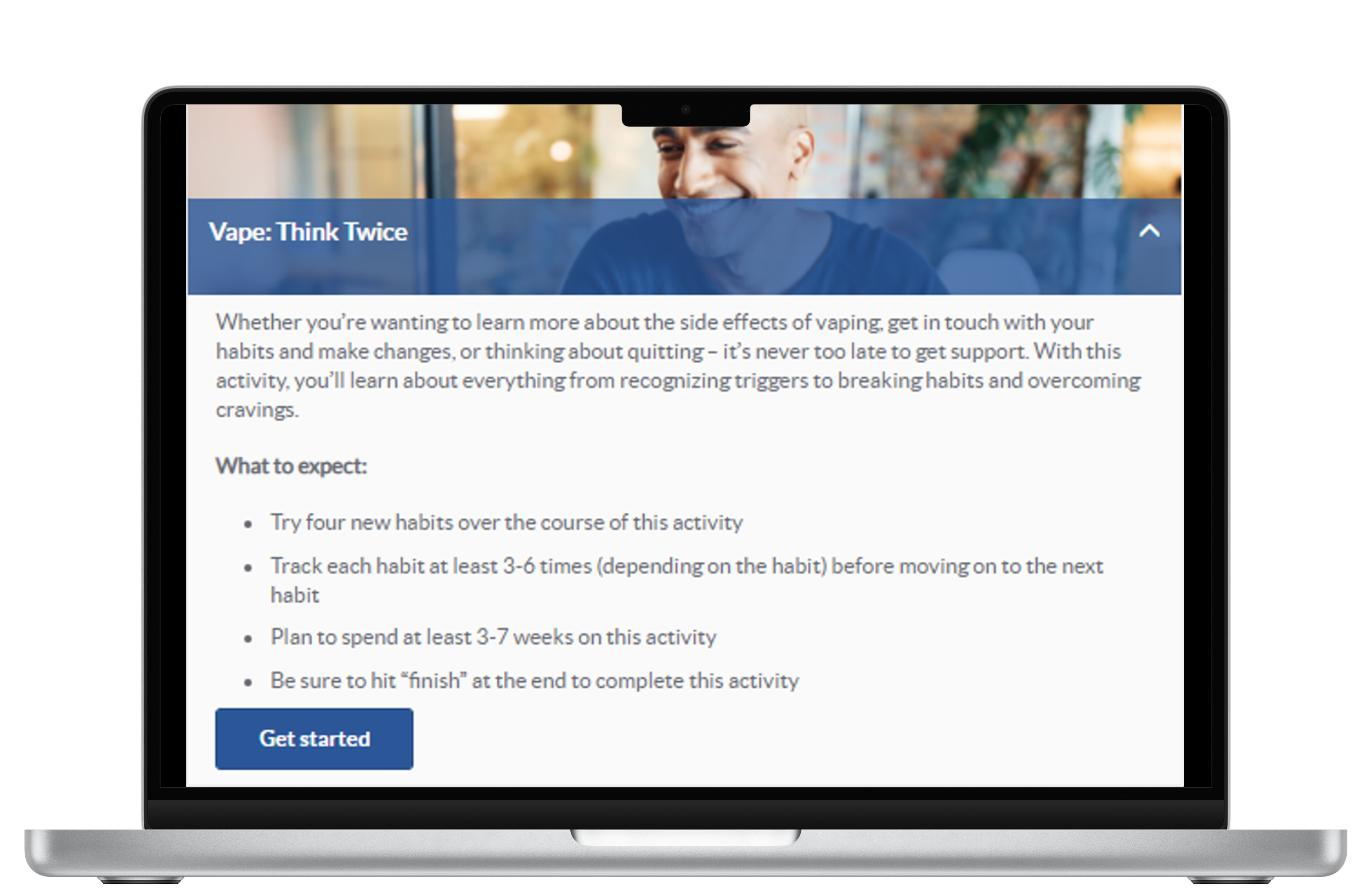
This is a structured, self-paced activity built into the HealthPartners’ member app. I wrote everything users read along the way, which includes educational content, habit prompts, progress framing, and the microcopy that keeps them moving through the experience. The goal was a voice that meets people where they are, not where they want to be.
ROLE
UX Writer
ORGANIZATION
True Talent Group at HealthPartners
Working toward the solve.
Vaping can be a semi-sensitive subject. The people using this program weren't necessarily ready to quit; they were somewhere in the middle–maybe curious or conflicted. The writing had to meet them there, providing real information and a clear path forward without lecturing, moralizing, or assuming the worst about their choices.
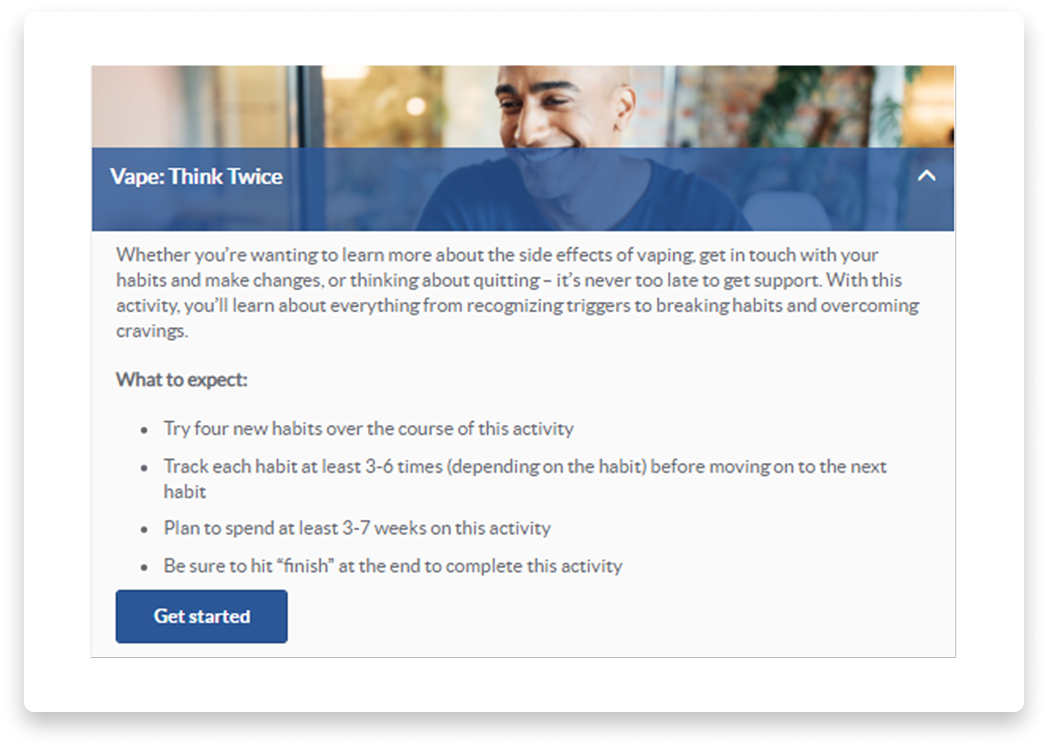
Getting Started
Here’s the entry point. Framing the full experience upfront—what to expect, how long it takes, and what commitment looks like. The goal was to give users a choice before diving in.
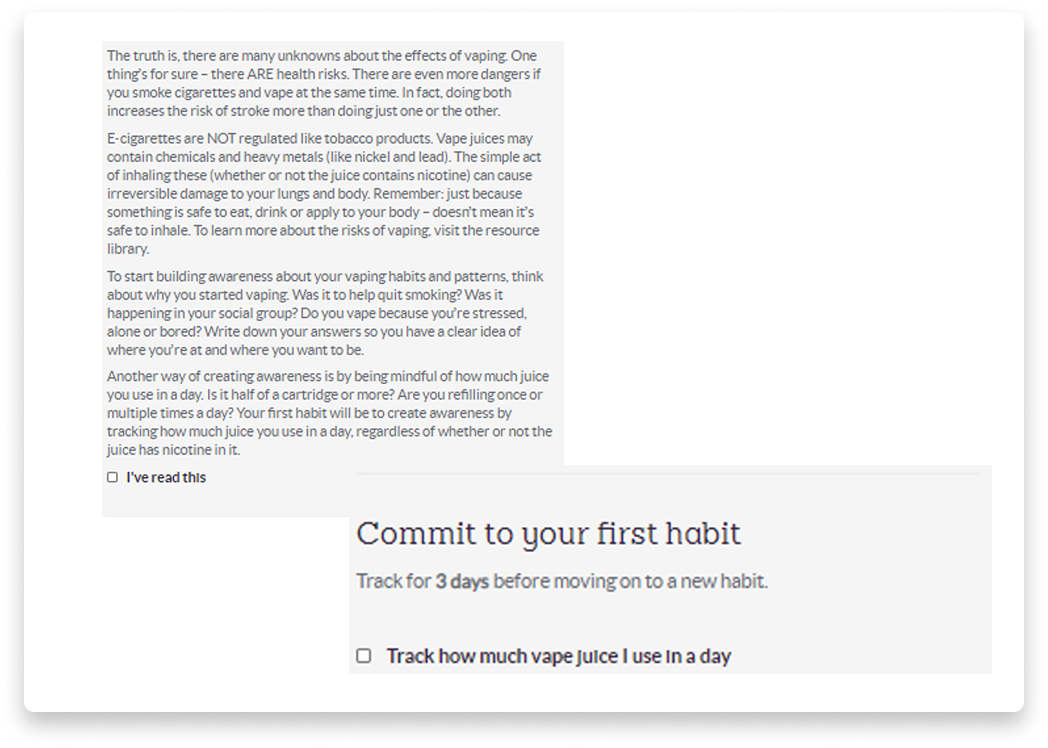
Understanding Habits
Now you’ll see educational content written in plain language (and without sounding an alarm or passing judgment). The goal was honest information, not a scare tactic.
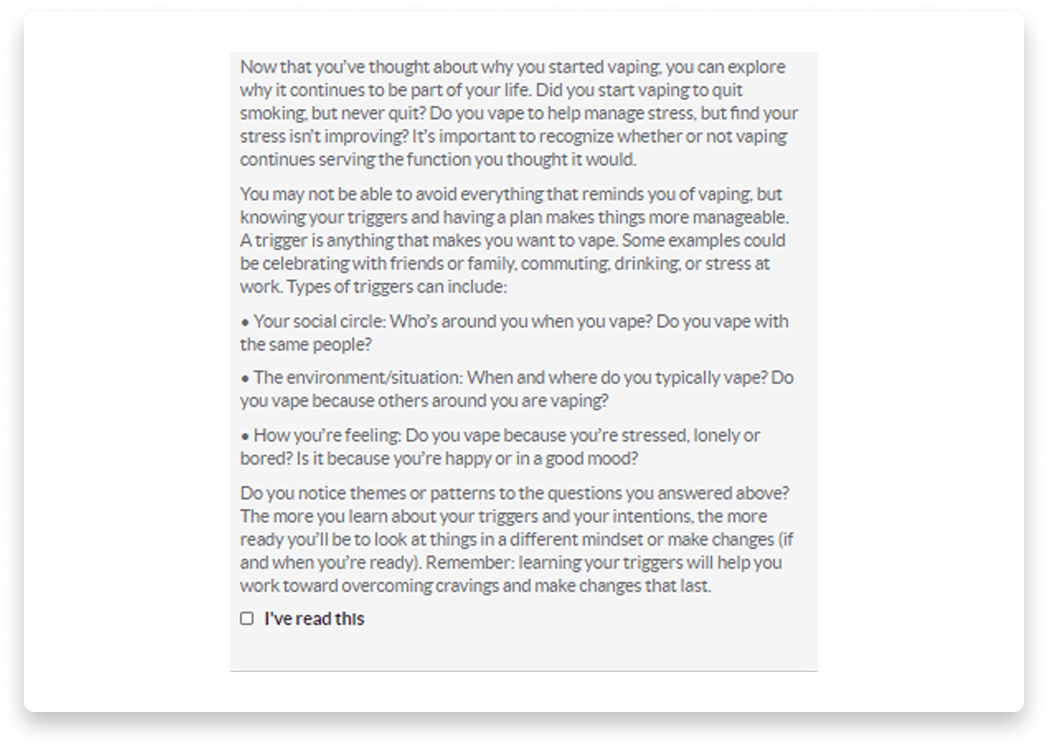
Identifying Triggers
Notice the reflective prompts that help users put their behaviors into context. The second-person questions feel like a conversation with a friend, not a quiz.
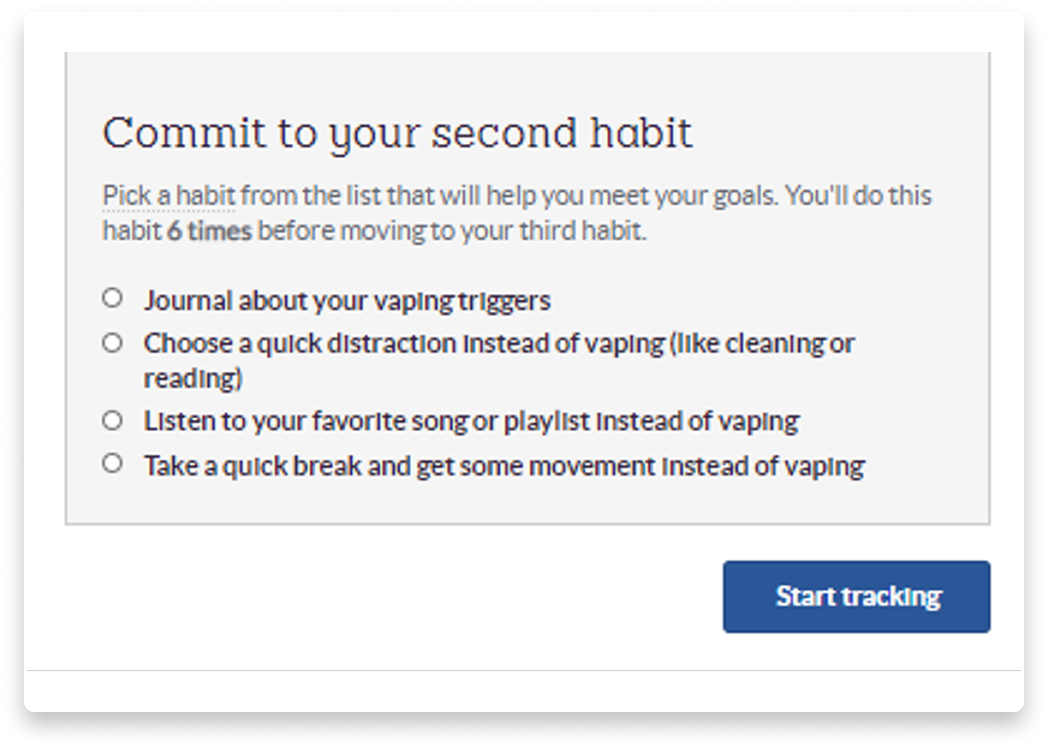
Committing to a Habit
See how the user-selected habit options are written to feel achievable (not aspirational or out of reach). These are small, specific, and doable.
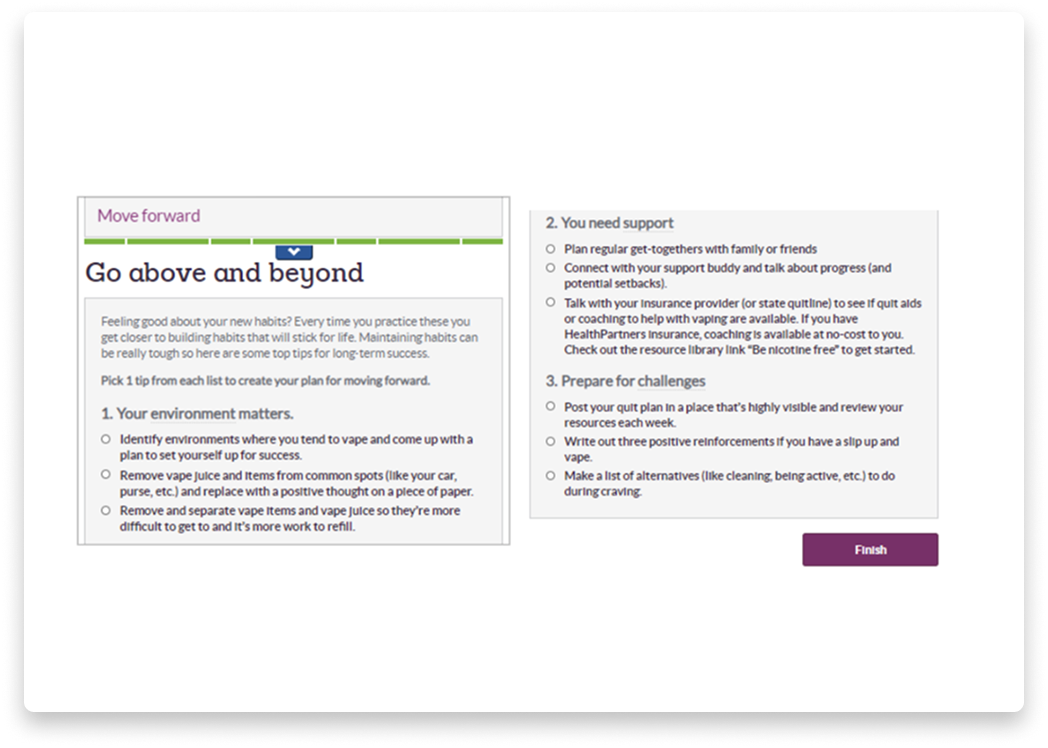
Moving Forward
Finally, the closing screen. Reinforcing momentum without overpromising. A practical checklist for what’s to come.
What I brought to the project.
Balancing the right tone with a fair amount of educational content is difficult. By making deliberate choices to frame every prompt as an invitation (rather than an instruction), the program felt achievable.